
Chile

On October 30, I made my way to the bus station in Mendoza to make the trip to my first stop in Chile: Santiago. The ride from Mendoza over the border into Chile was breathtaking, as it crossed the highest section of the Andes. Every bend in the road looked like a postcard!

I took these photos from the bus as we drove across the Andes. No sleeping on this ride; I didn't want to miss anything!

We arrived in Santiago in the afternoon, and I got a rideshare to my hostel from the bus station. Much to my delight, I found a Japanese restaurant nearby that had good reviews, so I went there and had sushi for dinner.
The following morning, I joined a city tour of Santiago, bright and early.

Posing with the Santiago sign on one side of the Plaza de Armas, which is the historical center of the city. This area was once owned and established by Pedro de Valdivia, a Spanish conquistador and the first colonial governor of Chile.
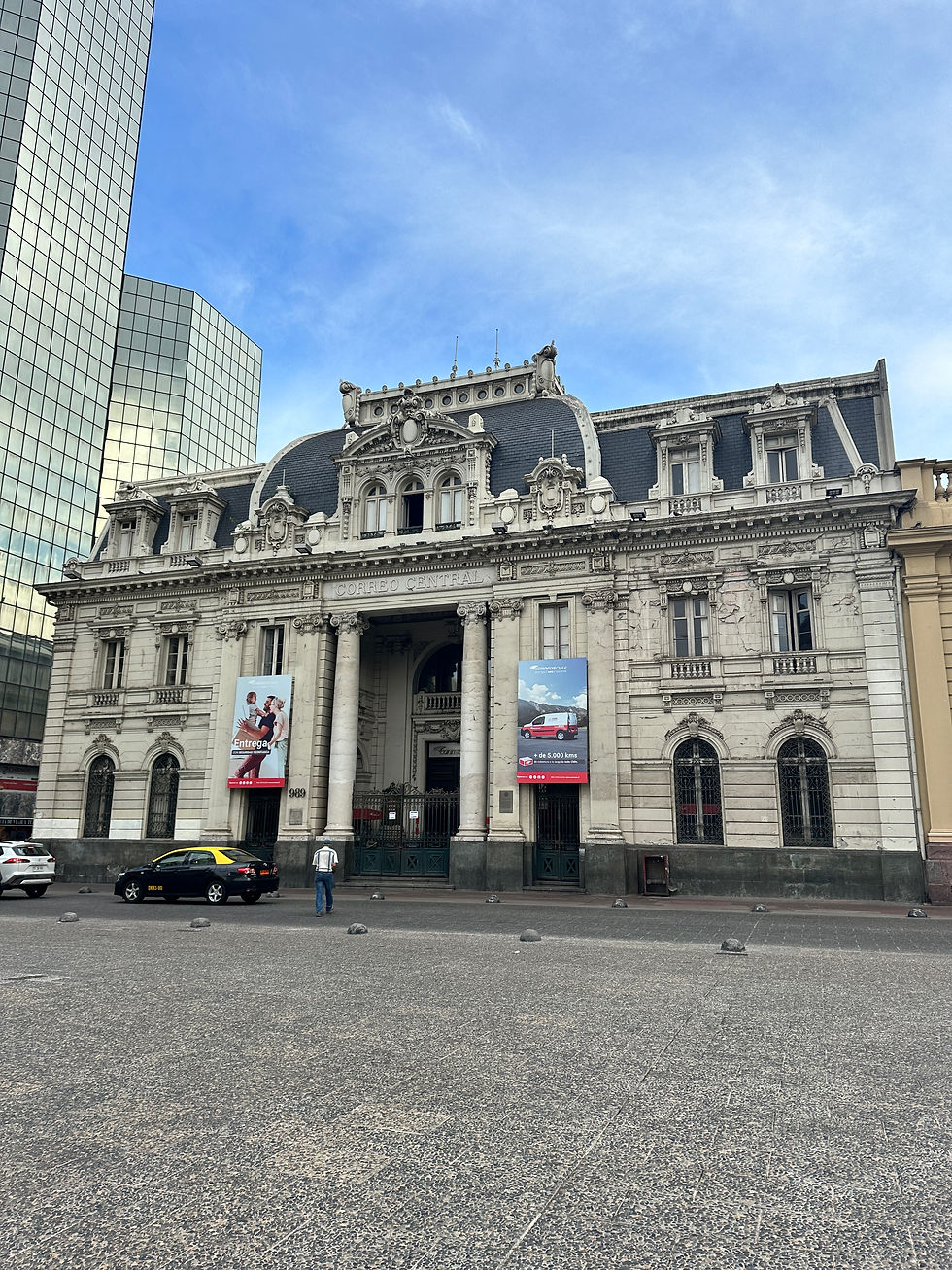
This building, which is on one side of the Plaza de Armas, was a presidential palace until 1846, and now serves as the Central Post Office headquarters.

The Palacio de la Real Audiencia, or the Royal Palace Court, used to be the home for the royal courts of justice. It became the National History Museum of Chile in 1982.
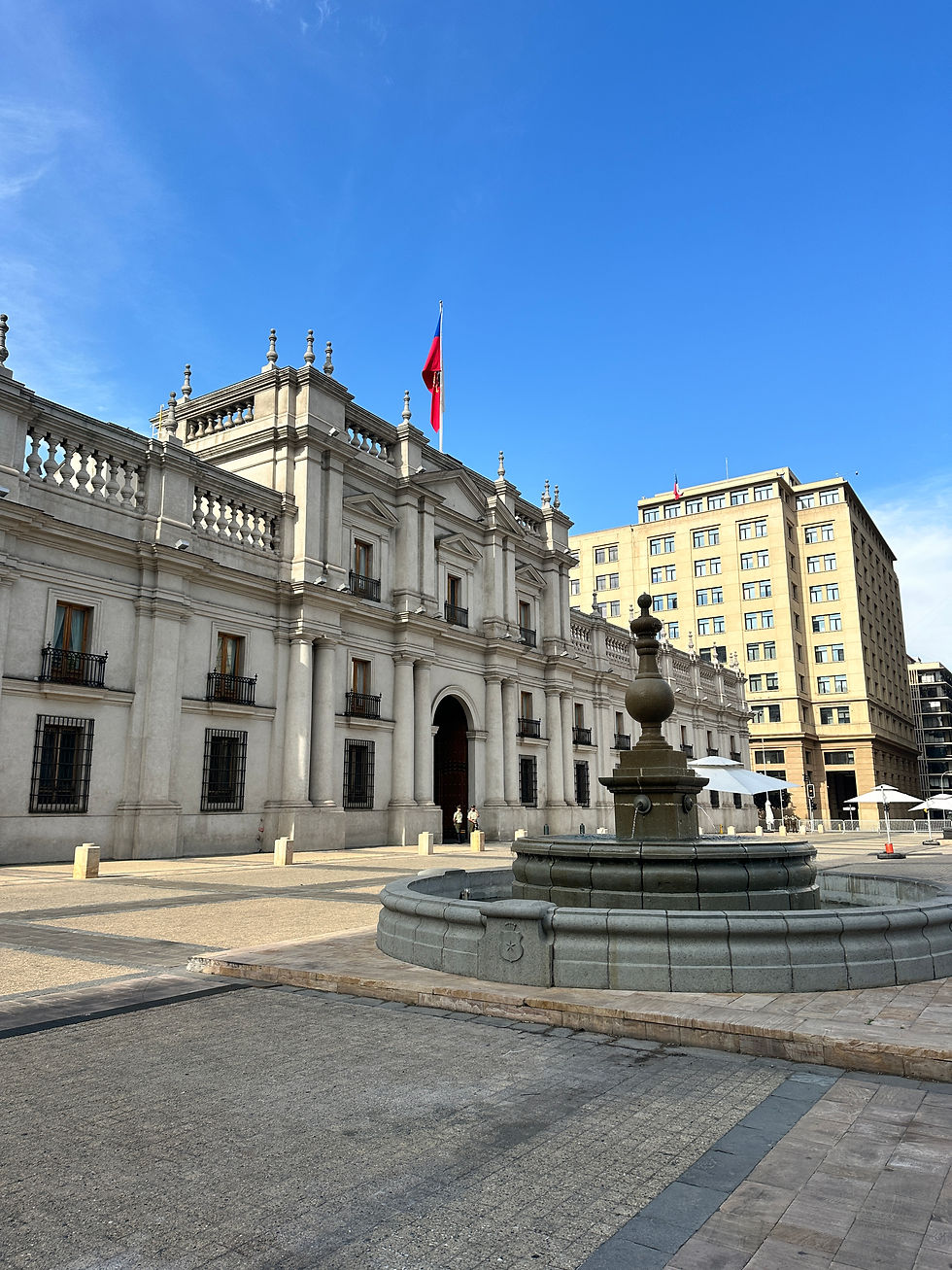
Palacio de la Moneda, or the Palace of the Mint, in the Plaza de la Constitución, which serves as the seat of the President of the Republic of Chile. This was the site of the military coup d'état on September 11, 1973. According to Wikipedia, "the Chilean Air Force strafed the palace with unguided rockets and automatic cannon fire. The president Salvador Allende died by suicide in the palace on the same day."

Memorial to President Salvador Allende and the governor's palace

View of La Moneda across Constitution Square

Patio Bellavista, an open-air shopping and dining area
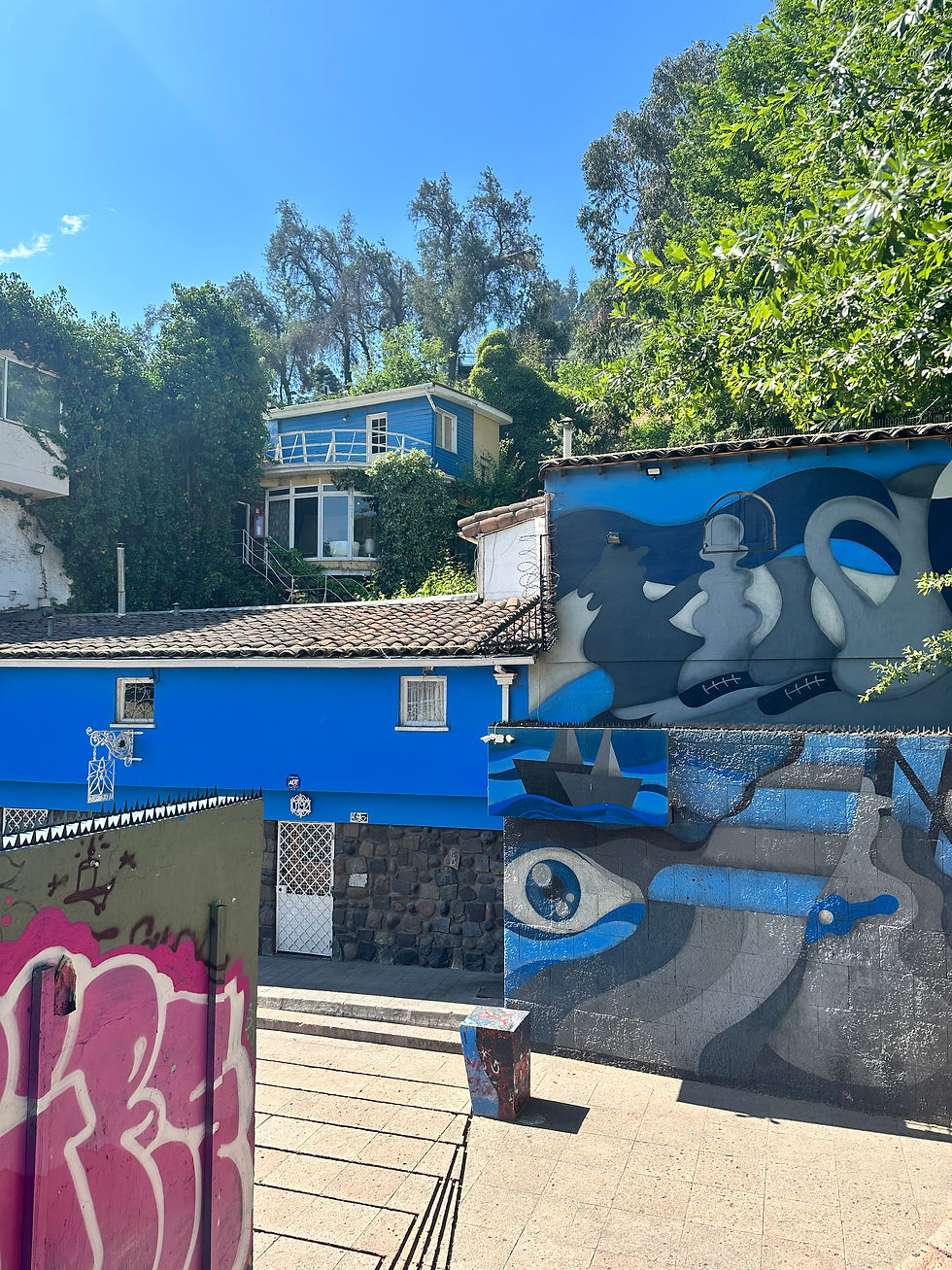
La Chascona, which was the home of famous Chilean poet Pablo Neruda, and is currently a museum to him and his work
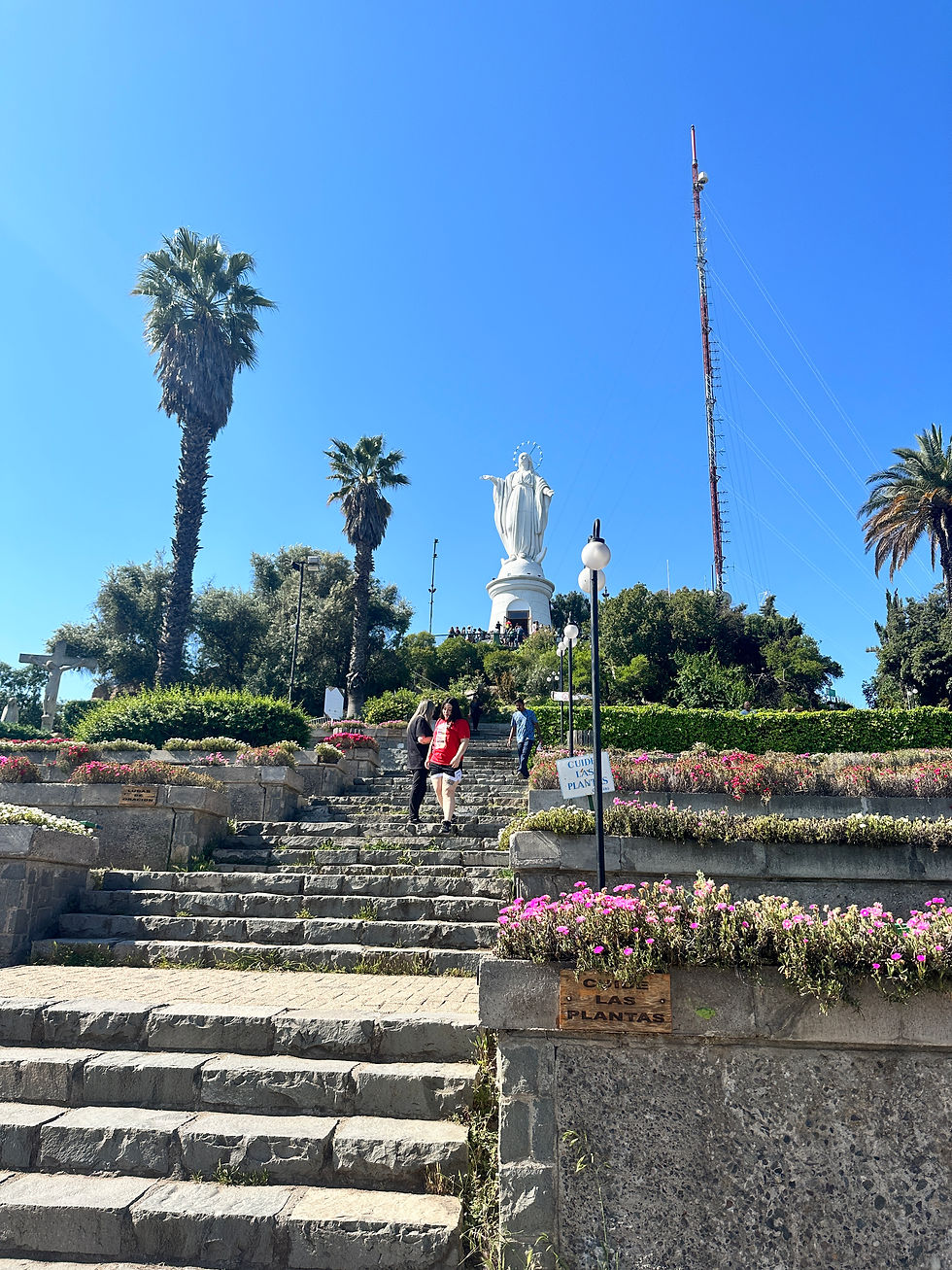
I then went over to San Cristóbal Hill. I used the funicular to get to the top, where there is a statue of the Immaculate Conception, pictured above

The views of Santiago below really made the trip up worth it!

I had to go to Wikipedia for this one, which describes this drink, mote con huesillo, as "a traditional, non-alcoholic Chilean summer drink composed of sweet nectar made from dried peaches sugar, and cinnamon, mixed with cooked, husked wheat berries." It was sweet and cold and you get a snack and drink in one, so what a bargain!
After coming down from the hilltop on the funicular, I grabbed an early dinner and headed back to my hostel. I had been out for the entire day at that point so I called it an early night!
The following day, I left Santiago for the coast as I headed for Valparaíso. This region is the second-most populous in Chile, and it's the headquarters of the Chilean Navy. According to Wikipedia, "Valparaíso played an important geopolitical role in the second half of the 19th century when it served as a major stopover for ships traveling between the Atlantic and Pacific oceans via the Straits of Magellan. The area experienced rapid growth during its golden age as a magnet for European immigrants, when the city was known by international sailors as 'Little San Francisco' and 'jewel of the Pacific.' The twentieth century was unfavorable to Valparaíso, as many wealthy families abandoned the city. The opening of the Panama Canal in 1914, and the associated reduction in ship traffic, dealt a serious blow to the region's shipping- and port-based economy. However, between 2000 and 2015, the city experienced a recovery, attracting artists, tourists, and cultural entrepreneurs, who settled after they were attracted by the city's hillside historic districts. In 2003, the historic quarter of Valparaíso was declared a UNESCO World Heritage Site."
Most of my photos from Valparaíso are just appreciating all of the public art. It was a delightful place to wander around for the day!


Chilean Navy Headquarters

Across the street from the Naval Headquarters is the Heroes Monument, dedicated to sailors lost at sea. The man at the top is Captain Arturo Prat, who is revered in Chile for his courage when his ship, the Esmeralda, was sinking.
On my walking tour of Valparaíso, I met a very nice couple who was traveling a similar route to mine, and we ended up having dinner together afterwards. I took an Uber back to my hostel later in the day to rest up before I visited another seaside down, Viña del Mar.

Viña del Mar is most famous for being a seaside resort town, so I couldn't resist a quick trip to the beach!
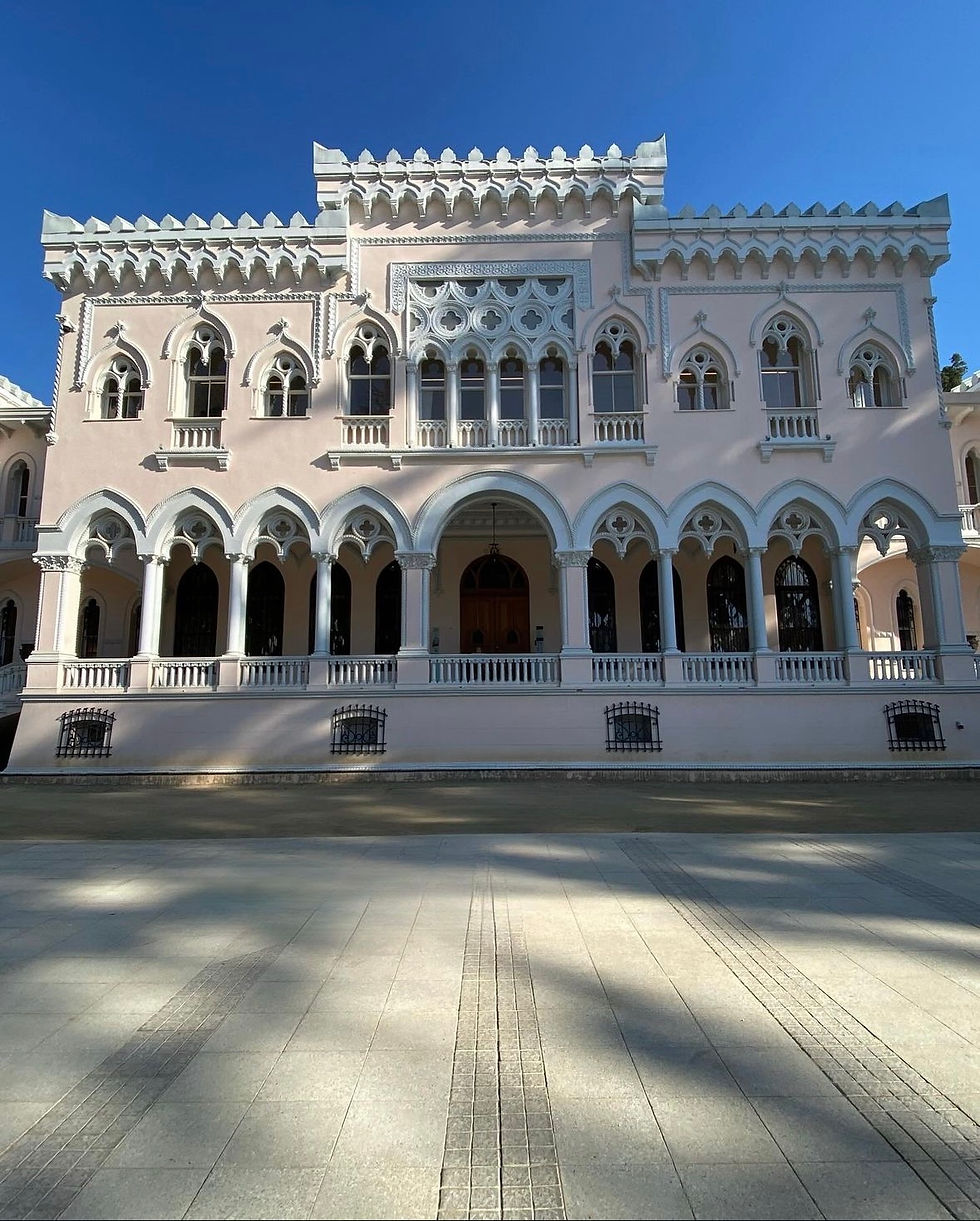
The Palacio Vergara is the former home of Jose Francisco Vergara, the founder of Viña del Mar. Built in 1910, it now serves as a fine art museum.

I love the detail on the inside!

I'm so grateful that elephant poaching and the ivory trade has fallen off so much, but if you're going to purchase an elephant tusk, this is the correct use for it, in my opinion. The detail is crazy!

A moai from Rapa Nui, aka Easter Island, installed outside the Fonck Archaeological Museum in Viña del Mar

Wulff Castle was built in 1906 for the Wulffs, a family of German immigrants. It is now the headquarters of the city heritage center.
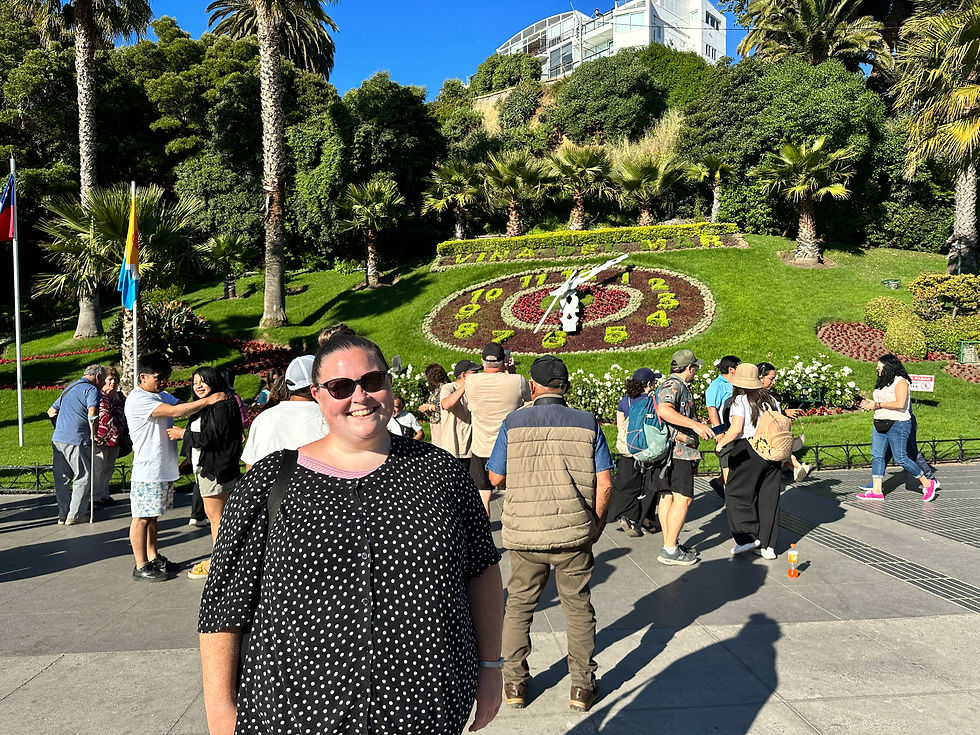
The Flower Clock was built in 1962 when Viña del Mar was a host of the World Cup. It still works today!
I left Viña del Mar that evening to head back to Santiago. The itinerary that was originally booked for me by the tour company included a 22 hour bus ride the following day. I decided to opt out of that hellish experience and decided to book the two-hour flight instead.
I stayed near the airport that night, and I got a flight to Calama early the next morning. I spent the day in Calama mostly just resting and hanging out; I figured I'd been on the go enough recently that I earned a relaxing day. The following morning, I took a 90-minute bus (which is much more my style) to San Pedro de Atacama. It's so named because it's at the edge of the Atacama Desert, the driest and highest nonpolar desert in the world.
I got to San Pedro around lunchtime and checked into my hostel. San Pedro largely exists as a gateway because of all the tourists who want to visit the desert, so I got to really mix it up and visit a French bakery for lunch and have a burger for dinner.
It ended up being two relaxing days in a row, which was nice because I had to get up at 4:30am the following day for my trip to see the Geysers of Tatio.

El Tatio is a geothermal field with more than a dozen geysers, and it's 14,000 feet above sea level

The tours go early in the morning because it's still really cold, so the steam looks dramatic!

The tour included breakfast, and a fox came over to investigate while we were eating!
I got dropped back off at my hostel around lunchtime. I had something to eat, took a nap, and waited for it to get dark. Due to the elevation and the isolation, the stargazing in the Atacama desert is some of the best in the world. I had signed up for a stargazing event that night, and that was truly the highlight of my time in Chile.

The stars were so bright that I was able to take this one just with my phone!

The stargazing experience also included this photoshoot, which was very funny to pose for
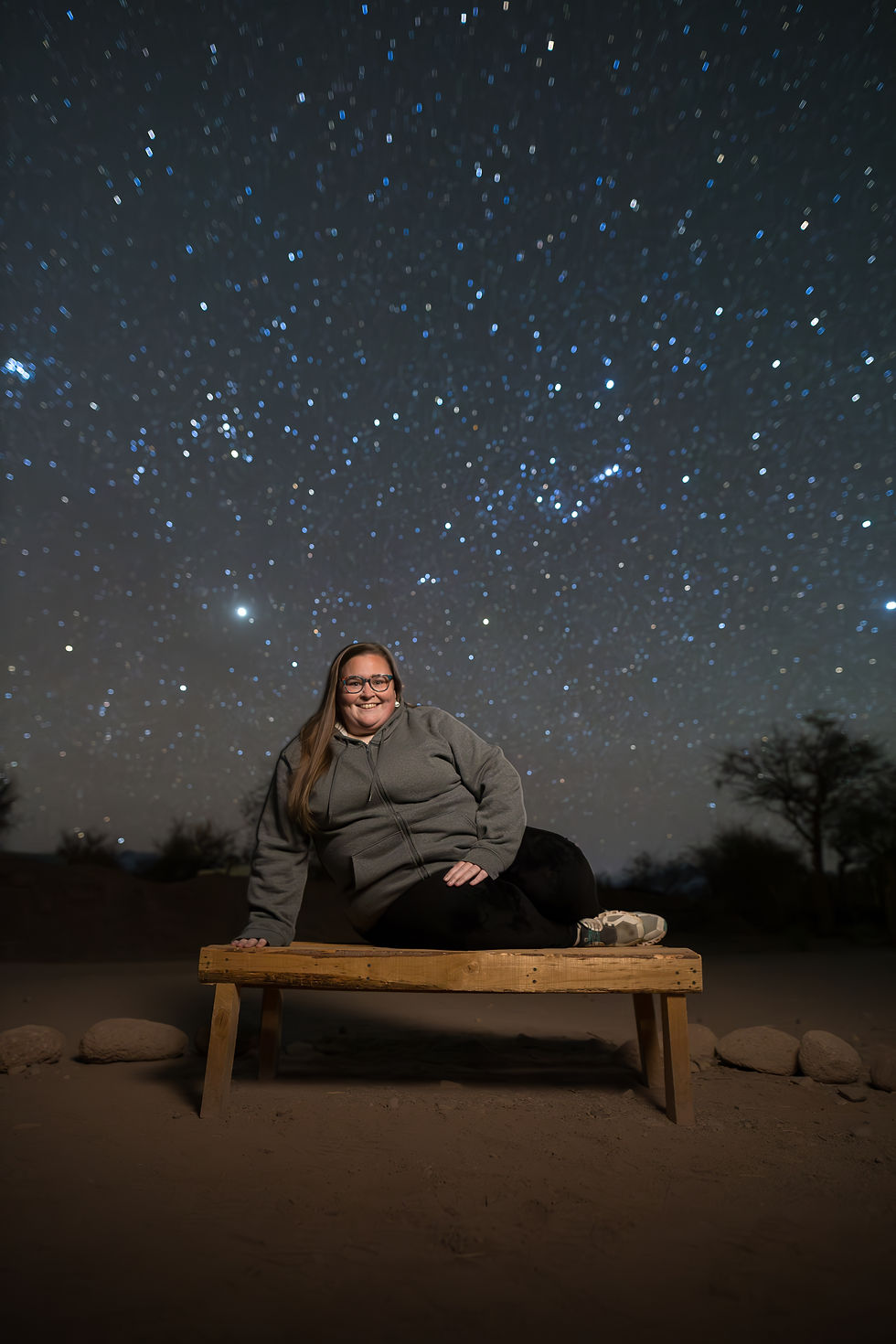
But you can't argue with the results!
I went from one extreme high, having loved the stargazing experience so much, to an extreme low, when I realized the outer door of my hostel (which I had never seen shut, up until that point) was closed and locked when I got back around midnight. I only had a key for my actual room within the hostel, not for the outer door. Banging on the door and literally screaming did nothing but wake up the neighbors. Cue the lowpoint of the entire trip, when I was trapped outside in the cold, literally sitting on the dirt road, for about four hours. Thankfully I knew that people would be getting up relatively soon for the early morning tours and treks, so a couple finally came out around 4am, and I went in and got a couple of hours of sleep before my next tour.

Took a tour to walk the loop of the 7 Hidden Lagoons of Baltinache. Due to extreme salinity, swimmers float effortlessly, like in the Dead Sea. There's one pool where they used to allow tourists to swim, but too many people wore sunscreen inside and it altered the pool's pH balance, so when I was there we could only admire them from the boardwalk.
My final tour in San Pedro de Atacama was to visit the Valle de la Luna, or the Valley of the Moon. The Valley is a geographic area with various stone and sand formations which have been carved by wind and water. There's also a high concentration of salt, so before it was designated a national reserve, salt mining used to occur in this area, as well.

Chile or Utah? This reminded me so much of Monument Valley or the American Southwest to me that I couldn't resist the photo.

Golden hour at Valle de la Luna

Watching the sunset here was breathtaking!
That was my last full day in Chile, as the following morning I joined a tour that would take me across the border into the last country on my South American tour: Bolivia!


Comments